A gluten free pizza crust recipe that actually delivers crispy edges and a soft middle starts with one uncomfortable truth: gluten-free dough needs around 75% hydration, compared to roughly 60% for standard wheat dough. That gap explains most of the failures people run into. They follow wheat-dough logic, add less water, and end up with a crumbly disc that snaps when you fold it. The fix isn’t some magic ingredient — it’s understanding what holds the structure together when there’s no gluten to do the job.
Gluten does two things in regular dough: it traps gas so the crust puffs, and it gives the dough stretch so it doesn’t crack. Take it away and you need substitutes for both functions. That’s why a good gluten-free crust involves several different ingredients working together, and why single-flour attempts almost always fall short.
Why Gluten-Free Dough Acts Differently
Standard wheat dough forms a protein web when you knead it, and that web holds moisture, traps CO2 from yeast, and gives the baked crust its chew. Gluten-free flours don’t form that web. The starches and proteins in rice flour, almond flour, or oat flour are structurally different, absorbing water at different rates, and none of them bind the way gluten does. The practical result is that gluten-free dough is more like a thick batter. It doesn’t spring back when you poke it, and if your hydration is too low, the crust bakes up dense and gritty rather than tender.
That’s why the 75% hydration target matters. The dough needs extra water to stay workable and to produce steam in the oven, which is what gives you that soft interior. Yeast still works here, but the rise looks different — don’t expect it to double. A modest 30-40% puff over about 45 minutes at room temperature is normal. Pushing for more usually just makes the crust gummy.
Choosing the Right Flour Blend
Single-flour attempts — 100% almond, oat, or rice flour — mostly fail for the same reason: no single flour handles structure, crispness, and stretch on its own. A 1-to-1 gluten-free blend from the store, like those sold by Bob’s Red Mill or King Arthur, already solves this by combining rice flour, tapioca starch, and a binder. They work well and save a lot of trial and error, which I appreciate on a weeknight.
If you want to mix your own, the ratio I use is roughly two parts white rice flour to one part tapioca starch, with a smaller amount of potato starch. Rice flour is the backbone — it bakes up firm and creates that crispness at the edges. Tapioca starch is the stretchy binder that keeps the crust from cracking when you slide it off the pan. Without it, even a decent blend turns brittle.
Xanthan gum acts as the gluten mimic. Use exactly 1/4 teaspoon per cup of flour in your blend. Less and the crust falls apart; more and it goes oddly gummy. If your store-bought blend already contains xanthan gum (most do — check the label), don’t add more.
Mixing, Shaping, and Par-Baking
Mix your dough until fully combined, then let it rest 10 minutes before shaping. That rest period lets the rice flour hydrate properly. Skip it and the dough feels drier than it actually is, which tempts you to add more water and throws off the whole ratio.
Shaping is where people get tripped up. The dough won’t roll like wheat dough, so press it out with lightly oiled hands onto a parchment-lined baking sheet or a preheated pizza stone. Aim for about 1/4 inch thick in the center, letting the edges build up to around 3/8 inch. That thickness difference is what creates the contrast later — thin center bakes firm but stays pliable, while the thicker rim crisps on the outside and stays soft inside.
Par-baking is non-negotiable. Slide the bare crust into a 450°F (232°C) oven for 8 to 10 minutes before adding any toppings. This sets the structure, dries out the surface so sauce doesn’t soak in, and starts the crisping at the edges. Most soggy gluten-free pizza problems trace back to skipping this step or baking at too low a temperature. A pizza stone or heavy steel pan preheated in the oven helps enormously — that burst of bottom heat in the first few minutes is hard to replicate any other way.
Toppings, Baking, and Serving
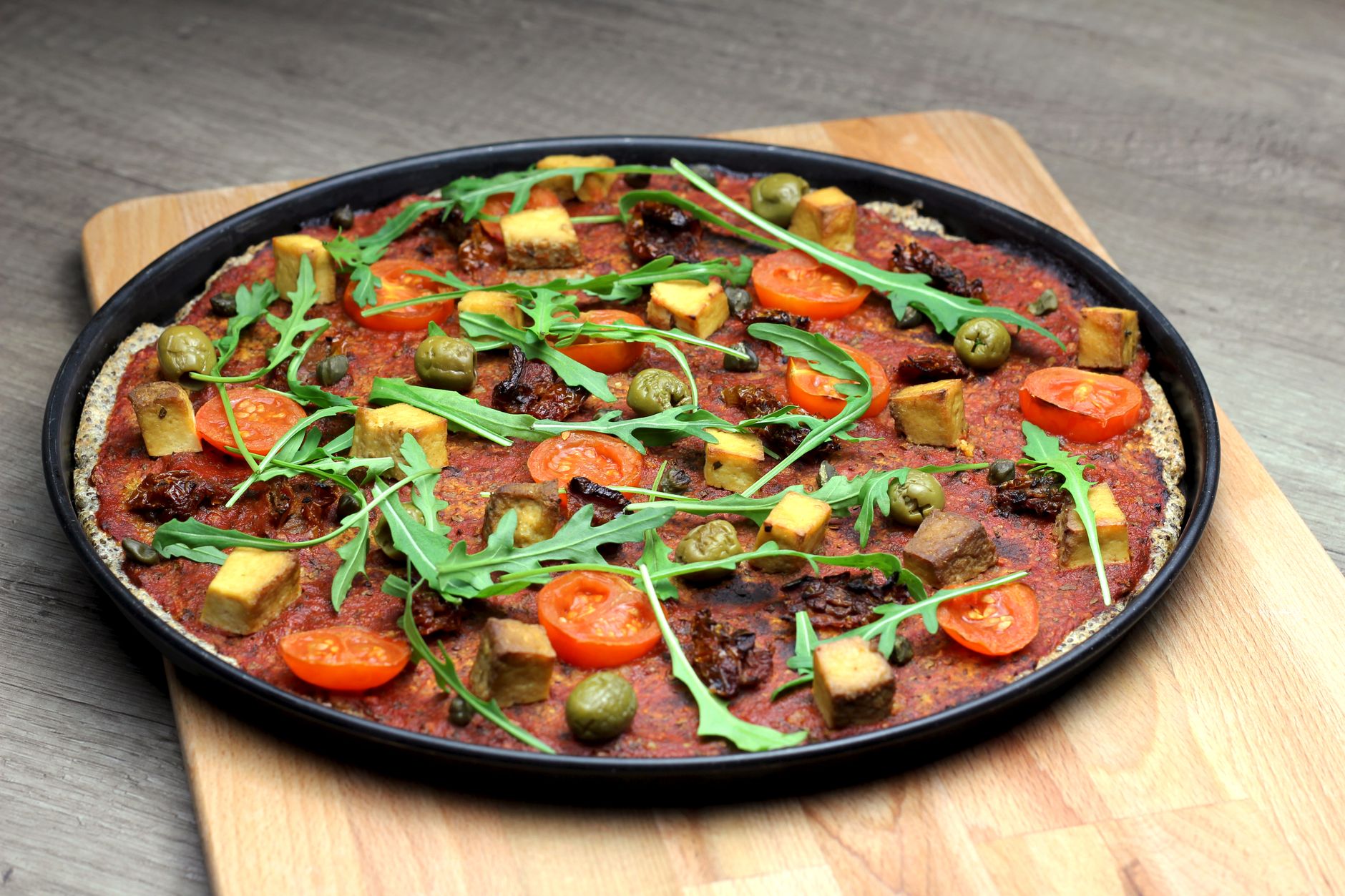
After par-baking, pull the crust out, add your toppings, and return it to the oven for another 10 to 12 minutes. Keep sauce portions modest. A gluten free pizza crust recipe: crispy edges and a soft center live or die by moisture management, and a heavy wet sauce layer will undo your par-bake work fast. About 3 tablespoons for a 12-inch crust is usually enough, spread to within half an inch of the edge so the rim stays dry.
Cheese matters too. Fresh mozzarella releases a lot of water, so blot the slices dry with a paper towel before topping. Low-moisture mozzarella is more forgiving and honestly performs better on a gluten-free base (I say this having learned the hard way). Serve immediately — gluten-free crusts lose crispness faster than wheat crusts because the starches reabsorb moisture as they cool. If you’re serving a crowd, hold the pizzas in a 200°F oven for up to 15 minutes rather than stacking them.
Getting Consistent Results Next Time
The gluten free pizza crust recipe approach here isn’t complicated, but it does ask you to respect the structural differences rather than fight them. Use a blend with rice flour and tapioca starch, keep xanthan gum at 1/4 teaspoon per cup, hydrate to 75%, and always par-bake at 450°F. Those four things fix the majority of failures I’ve seen in practice. Once you’ve made it twice, the whole process runs about 90 minutes start to finish, and the crust freezes well after the par-bake stage if you want to prep ahead.
FAQs
Can I make gluten-free pizza crust without xanthan gum?
Psyllium husk powder works as a substitute at about 1 teaspoon per cup of flour. It binds similarly but gives a slightly denser, more bread-like texture.
Why is my gluten-free pizza crust soggy in the middle?
Almost always a skipped or shortened par-bake, too much sauce, or an oven below 450°F. Par-baking on a preheated stone fixes this in most cases.
Can I freeze gluten-free pizza dough?
Freeze it after par-baking, not raw. Raw gluten-free dough changes texture when frozen; a par-baked crust reheats at 425°F in about 8 minutes and stays crisp.