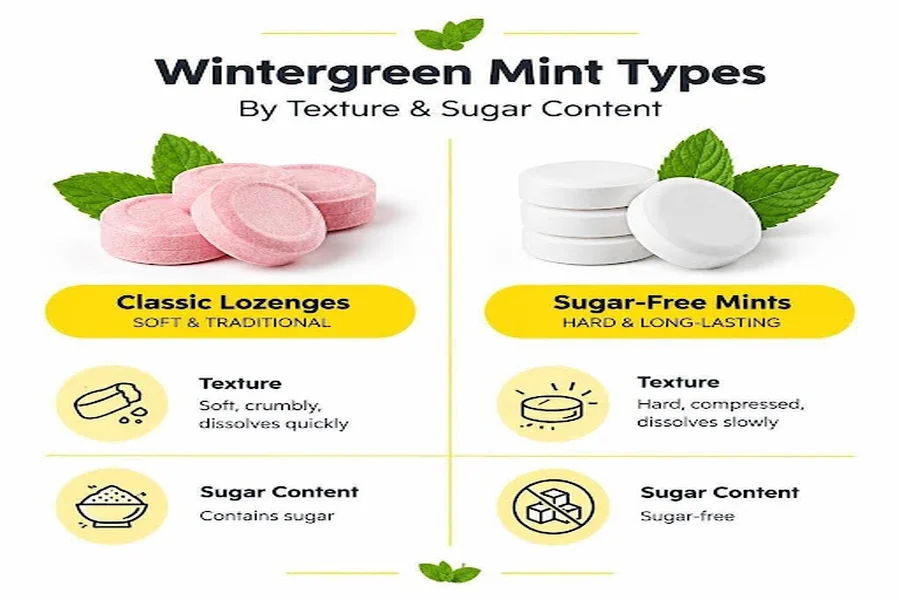
The world of wintergreen mints is divided between traditional candies that focus on nostalgia and modern versions built for function. Texture is the primary difference. Classic lozenges are designed to dissolve slowly and evenly, while modern sugar-free options often use harder, compressed structures to provide a longer-lasting cooling sensation.
Traditional Pressed Lozenges and Chalky Wafers
These mints are the quintessential “retro” candy. They have been produced since the 1800s and are easily recognized by their soft, pastel pink color and distinct, crumbly texture. When you place one in your mouth, it begins to melt almost immediately, releasing a burst of sweet wintergreen flavor. The unique mouthfeel comes from the mechanical cold-compression method, where finely powdered confectioner’s sugar is mixed with binders and pressed into firm tablets without applying high heat.
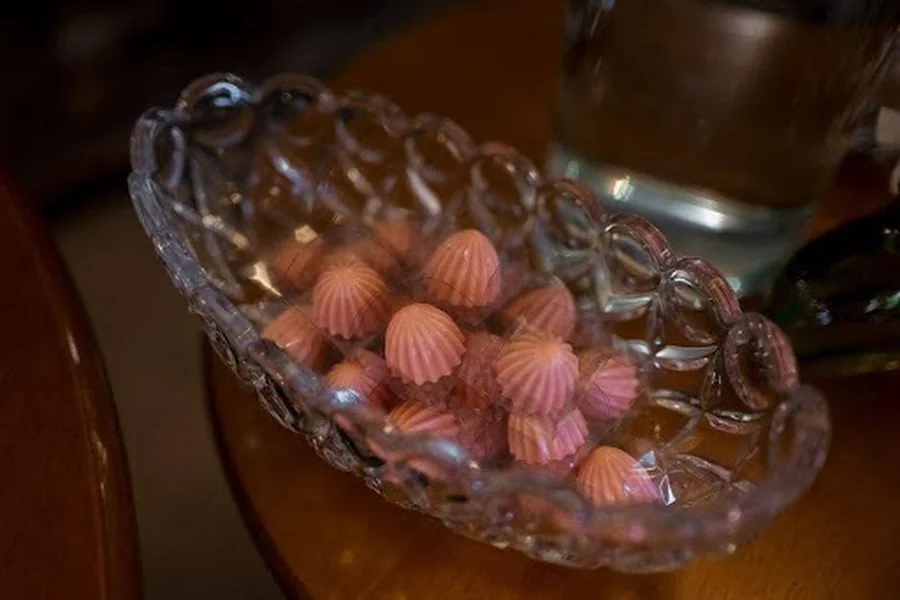
These lozenges are typically made from a blend of sugar, corn syrup, dextrose, and vegetable gums like tragacanth or acacia. Because they are soft and easy to chew, they are a favorite for candy bowls in homes and offices. They are often served in glass dishes, acting as a classic, welcoming treat for guests. The porous, granular matrix of a chalky lozenge allows saliva to permeate the tablet rapidly, creating a fast-acting flavor release that peaks within seconds of consumption.
Hard Candies and Ring Mints
If you prefer a treat that lasts longer, hard candies and ring-shaped mints are the better choice. These are boiled at high temperatures, resulting in a dense, glass-like structure that does not melt quickly. In confectioner chemistry, this is referred to as an amorphous sugar glass state, achieved by cooking sucrose and glucose syrup to the hard-crack stage above 300 degrees Fahrenheit before cooling. This slow dissolution allows the wintergreen flavor to persist in your mouth for several minutes.
Many of these are sold as individually wrapped pieces. This packaging style is highly practical for large events, weddings, or office reception desks, as it keeps the mints hygienic and prevents them from sticking together in a shared bowl. The structural density also makes hard boiled mints far more resilient to physical crushing during travel compared to brittle pressed wafers.
Modern Sugar-Free and Polyol Alternatives
For those who want fresh breath without the sugar, modern manufacturers have developed sugar-free mints. These use sugar alcohols, such as sorbitol, xylitol, erythritol, and maltitol, to provide sweetness without the calories of traditional sugar. These mints are often found in small, portable pucks or tins.
Polyols offer a unique physical benefit beyond calorie reduction: many sugar alcohols dissolve endothermically, absorbing heat from your mouth as they break down. When combined with the botanical coolness of wintergreen, this chemical reaction produces an intensified, multi-sensory chill that feels distinctly colder than room temperature.
| Feature | Traditional Lozenge | Hard Candy | Sugar-Free Mint |
| Calories | Moderate (10-15) | Moderate (15) | Low (0-5) |
| Dissolving Time | Fast | Slow | Medium |
| Best Use | Nostalgic snacking | Long-lasting breath | Pocket/On-the-go |
Analyzing Ingredients, Nutrition, and Dietary Standards
Understanding what goes into your mints is important, especially if you have specific health goals or dietary restrictions. While the flavor profile is consistent across most brands, the base ingredients can vary significantly.
Flavor Sources and the Chemistry of Wintergreen
The signature “wintergreen” taste comes from an aromatic organic ester called methyl salicylate. In classic candies, this was historically steam-distilled from eastern teaberry (Gaultheria procumbens) foliage or sweet birch bark (Betula lenta). Today, it is frequently synthesized by reacting salicylic acid with methanol to ensure a consistent, pure, medicinal-sweet profile. This compound stimulates the sensory trigeminal nerve pathways responsible for temperature perception, delivering the unmistakable cooling sensation that many associate with fresh breath.
A famous physical property of wintergreen hard candies containing sugar and methyl salicylate is triboluminescence. When you crush these candies between your teeth in total darkness, the mechanical fracturing of crystalline sucrose releases electrical energy that excites nitrogen molecules in the air. The methyl salicylate absorbs this ultraviolet energy and re-emits it as a visible blue-green flash of light.
Caloric Density and Sugar Content
Traditional wintergreen mints are calorie-dense because they are primarily made of sugar. A single piece can range from 5 to 15 calories. If you are tracking your daily carbohydrate intake, these small treats can add up quickly if consumed in large amounts throughout a workday. In contrast, sugar-free mints typically contain 0 to 5 calories per piece. Always check the serving size listed on the container, as some “party-sized” bags define a serving as only one or two pieces.
From a dental standpoint, sugar-based mints feed oral bacteria that produce enamel-eroding acids. Sugar-free mints sweetened with xylitol provide the opposite effect; xylitol cannot be fermented by Streptococcus mutans, helping inhibit plaque formation and supporting oral pH balance.
Allergen Profiles and Dietary Suitability
Most wintergreen mints are naturally fat-free and gluten-free, making them a safe choice for many people with common food sensitivities. However, you should always check the label for specific binders. Some traditional lozenges use gelatin, which is an animal-derived product, while others use vegetable gums like gum arabic, guar gum, or modified cellulose.
If you are looking for specific dietary compliance, look for these markers on the packaging:
- Gluten-Free: Essential for those with celiac disease or gluten intolerances.
- Sugar-Free/Keto-Friendly: Look for xylitol, erythritol, or sorbitol as the primary sweetener.
- Allergen-Safe: Check for “contains soy” or “processed in a facility with nuts,” as some mints use soy lecithin as an emulsifier or share equipment with nut-containing chocolates.
Choosing the Right Packaging and Quantity
The way your mints are packaged should match how you plan to use them. Whether you need a quick refresh before a meeting or a large supply for a party, there is a format designed for your needs.
Pocket Tins and On-the-Go Dispensers
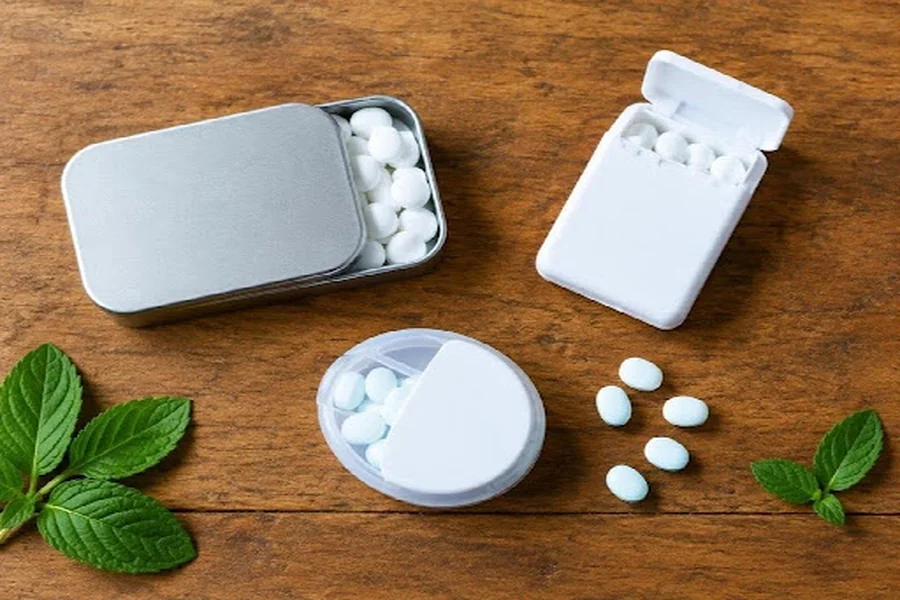
If you carry mints in your car, purse, or desk drawer, opt for metal tins or sliding plastic pucks. These containers are designed to be durable and airtight, which prevents the mints from absorbing moisture or losing their volatile aromatic flavor compounds over time. Tinplate steel and rigid plastic enclosures also protect brittle chalk wafers from pulverizing into dust under everyday movement and friction. They are also excellent for single-handed use, allowing you to grab a mint quickly before a social interaction.
Bulk Bags and Individually Wrapped Party Packs
Purchasing in bulk is the best way to save money. Bags weighing two pounds or more often cost significantly less per ounce than small tins. If you are stocking a high-traffic area, such as an office reception or a wedding candy bar, choose individually wrapped mints. Transparent or foil-twist wrappers keep the candy sanitary and ensure that guests can take a serving without touching other pieces. For home use, transfer bulk unwrapped lozenges into an airtight glass apothecary jar with a rubber gasket to maintain their crisp snap and keep ambient humidity from turning the surface sticky.
Sourcing Authentic Confectionery and Snack Packs
When you are looking for high-quality, reliable options, it helps to shop with specialists who understand the heritage of these treats. Finding a supplier that offers a variety of formats allows you to mix and match for different needs. For those who appreciate the classic experience, many regional confectioners provide excellent, traditional options. You can find a wide range of refreshing wintergreen mints and other assorted sweets for your pantry, desk, or upcoming event. These specialized confectionery distributors are perfect for those who want to stock up on nostalgic bulk favorites or need convenient grab-and-go snack packs for busy days.
Smart Shopping Tips: Value, Freshness, and Retail Options
Buying candy is often an impulse purchase, but taking a moment to compare your options can lead to better value and a fresher product.
Calculating Value Across Unit Sizes
When comparing prices, ignore the total price of the package and look at the price per ounce or price per hundred grams. A decorative pocket tin might cost three or four times more per ounce than a large multi-pound bulk pouch due to specialized metal packaging and brand positioning. If you enjoy mints daily, buy bulk refill bags and replenish your existing pocket tins at home.
Subscription programs and wholesale multi-packs can further drive down unit costs. However, calculate your realistic consumption rate before ordering ten pounds at once; wintergreen mints store well, but their essential oils slowly lose intensity over several months if containers are repeatedly opened to room air.
Online Marketplaces vs Local Confectioners
Online shopping provides the widest selection, allowing you to find specific sugar-free, organic, or bulk-size options that might not be on local shelves. However, local confectioners and candy shops are ideal if you need candy for an event today and want to inspect the physical condition of the product before purchasing.
When buying online, try to purchase from high-volume candy merchants to ensure fast inventory turnover and fresh product batches. If you are buying a large bulk bag, ensure the packaging features a multi-layer barrier film with a reliable zip-seal to prevent humidity absorption, which can cause hard boiled candies to become sticky or soft pressed lozenges to lose their signature structural integrity.
Summary
Selecting the right wintergreen mint comes down to balancing your need for flavor, convenience, and dietary requirements.
- For nostalgia: Choose traditional, soft, pink pressed lozenges made with natural vegetable gums.
- For long-lasting flavor: Choose hard, boiled rings crafted from clear sugar glass matrices.
- For health-conscious breath freshening: Choose sugar-free, xylitol-based pucks with an intense cooling profile.
By paying attention to the ingredients, the packaging style, and the price per ounce, you can ensure that you always have the perfect mint on hand for any occasion. Whether you are stocking a bowl for guests or keeping a tin in your pocket, these classic refreshments are a simple way to stay cool and prepared.