
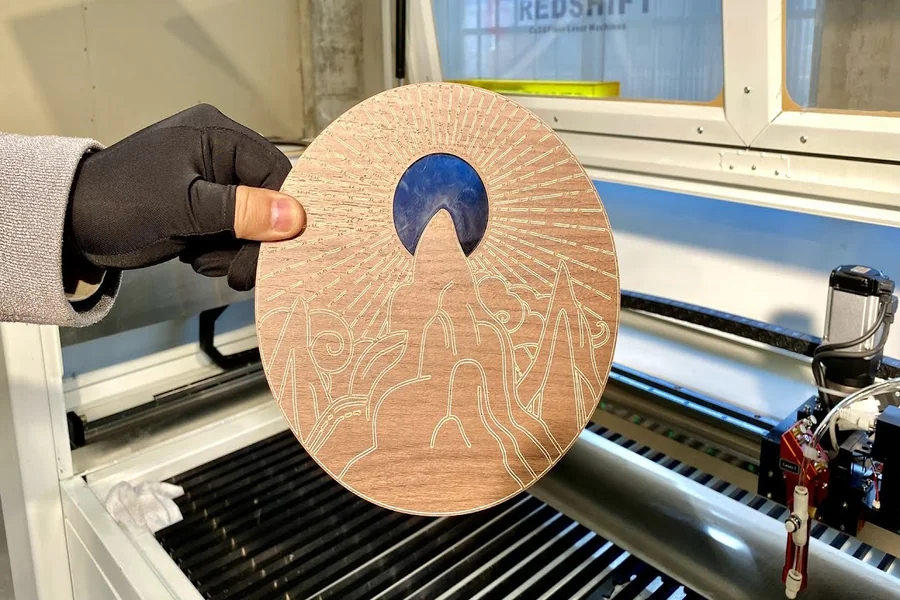
Starting a laser engraving side business from home can be an appealing way to turn a creative skill into an additional source of income. A laser engraver allows you to personalize products, create small batches of custom merchandise, and take on orders that larger manufacturers may not consider worthwhile. From engraved wooden gifts to custom signs and branded business products, there are plenty of potential applications.
However, buying a laser machine and listing a few products online does not automatically create a profitable business. The most successful home-based operations tend to start with a clear product niche, a realistic understanding of production costs, and a plan for reaching customers. If you are considering starting a laser engraving business, here are some important steps to take before investing in equipment.
1. Choose a Profitable Niche Before Buying a Laser
One of the biggest mistakes beginners make is trying to sell too many generic products. Engraved tumblers, keychains, coasters, cutting boards, and wooden signs are popular, but they are also widely available. Competing primarily on price can quickly reduce profit margins, particularly on marketplaces where customers can compare dozens of similar listings. Instead of asking what you can engrave, start by asking who you want to sell to and what they need.
Look for specialized customer groups
A focused niche gives your business a clearer identity and makes it easier to develop products that appeal to a specific audience. For example, you could build a catalog around:
- Wedding and event professionals: Custom table numbers, cake toppers, place cards, keepsake boxes, and personalized gifts for wedding planners and venues.
- Florists and gift shops: Engraved flower tags, wooden gift boxes, decorative signs, and seasonal merchandise.
- Local contractors and tradespeople: Equipment labels, custom tags, branded tool accessories, and identification plates made from suitable materials.
- Book lovers and stationery enthusiasts: Personalized bookmarks, engraved journals, book stands, and decorative desk accessories.
- Home décor customers: Custom cutting boards, wall signs, ornaments, and personalized wooden decorations.
These are starting points, not guaranteed bestsellers. Research local demand, browse customer reviews, and speak with potential buyers before committing to a product range.
Consider business-to-business orders
Selling individual products to consumers can work, but it often requires constant marketing and customer communication. Business-to-business orders can provide another route to more predictable production.
For example, a wedding planner may need customized table decorations for several events throughout the year. A florist might order branded wooden gift tags in batches. A local business could need a consistent supply of engraved promotional items.
Rather than depending entirely on one-off orders, you can build relationships with businesses that have recurring personalization needs.
Combine laser engraving with other skills
A laser does not have to be the only tool in your workshop. Combining engraving with woodworking, painting, leathercraft, or other creative skills can help distinguish your products from mass-produced alternatives. You might create a handmade wooden box and use the laser to add a personalized name or design. You could collaborate with a local artist to turn original illustrations into engraved wall art. The laser becomes part of a broader product-making process rather than the entire selling proposition.
2. Choose the Right Laser Engraver for Your Products
Once you have identified a potential niche, consider which machine can produce the items you intend to sell. Different laser technologies are designed for different materials, and choosing the wrong machine can limit your product range.
Diode lasers
Diode lasers are often considered an accessible entry point for hobbyists and beginners. Depending on their power and configuration, they can engrave materials such as wood, leather, and some coated surfaces. They can be useful for learning the basics and producing smaller projects. However, their cutting capabilities and production speeds may be limiting if you plan to handle larger orders or build a business around regular production.
CO? lasers
CO? laser engravers are particularly useful for businesses working with non-metal materials. They can engrave and cut suitable woods, acrylics, leather, paper products, and other compatible materials. For entrepreneurs interested in personalized gifts, signage, decorations, packaging, and custom merchandise, a CO? laser can provide considerable product flexibility. It can also help reduce production time when compared with smaller entry-level machines, depending on the project and settings. A desktop CO? laser engraver is probably the most practical option for someone who wants to operate from a dedicated home workshop without immediately investing in a large industrial system.
Fiber lasers
Fiber lasers are designed primarily for marking and engraving metals and certain other materials. They are commonly used for products such as metal tags, tools, jewelry components, stainless steel items, and industrial identification plates. They are not a direct replacement for a CO? machine when your main products involve wood or clear acrylic. The right choice depends on the materials you plan to process and the type of customers you intend to serve.
3. Consider a Desktop CO? Laser for a Home Workshop
If your business idea centers on wooden gifts, acrylic products, signs, and other non-metal items, a desktop CO? laser may be a suitable starting point. One option to consider is the OMTech Polar Lite 55W Desktop CO? Laser Engraver and Cutter. Its 55W CO? laser is designed for engraving and cutting compatible materials, making it relevant to small businesses producing personalized merchandise and custom projects.
The Polar Lite also supports rotary engraving for compatible cylindrical objects, which can expand the types of products a business offers. Its desktop format can be attractive to entrepreneurs who need a more compact machine than a larger workshop system.
Before purchasing, compare the machine’s work area with the dimensions of your planned products. Think about whether you will mainly make small gifts, larger signs, batches of ornaments, or several different product types. Consider the space required for the machine itself, material storage, a computer, and ventilation equipment..
4. Plan Your Home Workshop and Ventilation
A home-based laser business still needs a properly organized workspace. A spare room, garage, or dedicated workshop area may be suitable, depending on the machine, local requirements, and the ventilation arrangement. Before setting up, think beyond the footprint of the laser. You will also need room for raw materials, finished products, packaging supplies, tools, and order preparation.
Make ventilation a priority
Laser processing can produce smoke, particles, and potentially hazardous fumes. An appropriate exhaust or filtration system is essential, and the correct solution depends on the machine, material, and workspace. Where possible, plan for a properly designed exhaust system that safely moves emissions outdoors. If you use filtration equipment, make sure it is designed for the pollutants generated by your process. A basic dust filter is not necessarily sufficient for laser fumes.
Also, research the materials before processing them. Never assume that a material is safe to laser simply because it is available for crafts. Avoid materials such as PVC and vinyl unless the machine and process are specifically approved for them; their processing can release dangerous chemicals. Follow the manufacturer’s safety instructions, keep suitable fire-safety equipment nearby, and never leave a laser operating unattended.
Prepare your design and production tools
A laser engraving business also requires a computer and compatible design software. You will need to create or prepare artwork, adjust layouts, set engraving parameters, and organize customer files.
Spend time learning the software before accepting large orders. Test designs on scrap material, record successful settings, and develop repeatable production steps. This will help reduce mistakes and make it easier to reproduce customer orders consistently.
5. Price Your Products to Make a Real Profit
A product can generate sales without generating much profit. One of the most important skills for a new business owner is learning to calculate the actual cost of fulfilling each order.
The cost of a blank wooden board or acrylic sheet is only one part of the calculation. You should also account for:
- Material waste and failed test pieces.
- Machine operating time and maintenance.
- Design and customization time.
- Setup, cleaning, and finishing.
- Packaging and shipping materials.
- Marketplace payment and listing fees.
- Advertising and other business expenses.
Your own labor matters, even if you are running the business after your regular working hours.
For example, imagine that an engraved product sells for $30. After subtracting the blank, packaging, platform fees, and other direct expenses, you may discover that only a small amount remains to compensate you for designing, preparing, engraving, and packing the order.
If a product takes too long to make, you may need to increase the price, charge a separate customization fee, simplify the design, or sell it in batches.
Test your pricing before expanding
Start by producing a small number of sample products and recording the time and materials required for each one. Calculate what remains after all costs, then consider how much you earn for each hour of active work.
This will help you identify which products are worth keeping in your catalog. It may also reveal opportunities to offer bundles, minimum order quantities, or setup fees for business customers.
Avoid assuming that a product is profitable simply because customers are willing to buy it.
6. Handle the Business Basics Early
You do not necessarily need a complicated business structure to test a small side business, but you should understand the legal and administrative requirements where you live.
In the United States, some entrepreneurs begin as sole proprietors, while others choose to form an LLC. The appropriate structure depends on factors such as liability, taxes, business activities, and state requirements.
There is no single setup that works for everyone. Check your state and local rules for business registration, home-based business permits, zoning, sales tax obligations, and any requirements that apply to operating equipment from a residential property. The U.S. Small Business Administration and local business advisers can help you understand the steps involved.
You should also consider business insurance, especially if you sell products that customers will use regularly or accept valuable customer-owned items for engraving.
Keep business income and expenses organized from the beginning. Good records make it easier to understand profitability and prepare for tax obligations.
7. Find Customers Beyond Online Marketplaces
Platforms such as Etsy can help new businesses reach customers who are already searching for personalized products. However, an online listing alone is rarely a complete marketing strategy.
You need to give potential customers a reason to choose your business.
Build relationships with local businesses
Visit wedding planners, florists, gift shops, pet businesses, event organizers, and other companies that may benefit from customized products. Bring samples and explain how you can help them create branded or personalized items.
For business customers, reliability, consistent quality, and clear communication can be just as important as the engraving itself.
Use social media to show the process
Short videos and photographs can help demonstrate how a product is made. Show the material before engraving, the design process, the finished item, and examples of personalized orders.
Rather than posting only product photographs, explain what makes each item useful or distinctive. A video showing a custom wedding sign being produced may attract a different audience from a photograph of a generic wooden plaque.
Attend local markets and community events
Craft fairs, farmers’ markets, and seasonal events offer opportunities to meet customers in person. They also allow you to test products, collect feedback, and discover which designs attract the most attention.
You can use these events to build an email list or encourage customers to follow your business online, helping turn one-time buyers into repeat customers.
8. Start Small, Learn, and Expand Strategically
You do not need dozens of products to launch a laser engraving side business. A focused collection of a few well-designed products is often easier to manage and market than a large catalog with no clear identity.
Start with a niche, make samples, test your pricing, and collect feedback from real customers. Track which products generate inquiries and repeat orders. Over time, you can introduce complementary products, invest in additional equipment, or pursue larger business-to-business contracts.
A home-based laser engraving business is not simply about owning a machine. It is about finding customers with a specific need and developing a reliable way to meet it.
With the right niche, suitable equipment, realistic pricing, and consistent outreach, a desktop laser cutter can become a useful foundation for building a small business from home.