
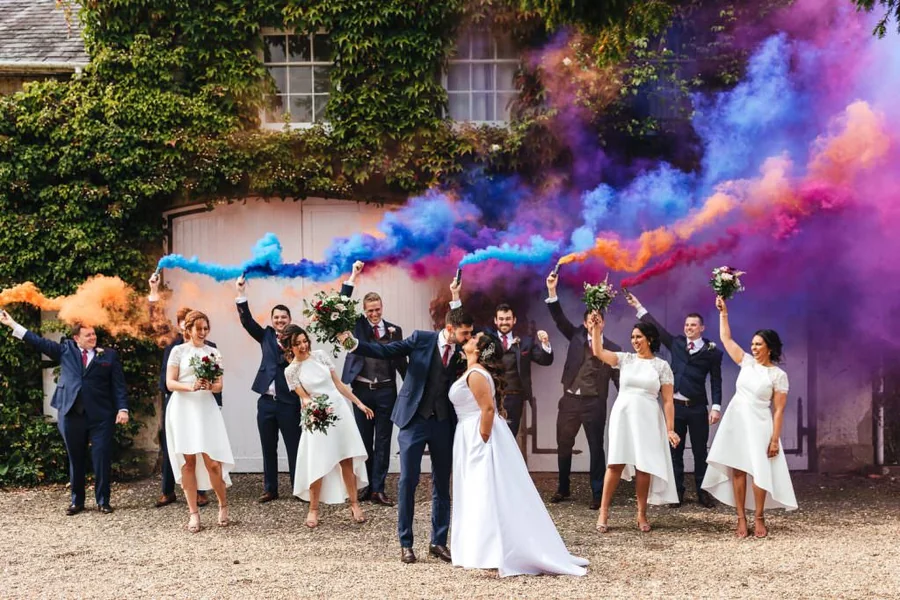
Smoke effects can transform an ordinary event, photoshoot or performance into something far more atmospheric. A wash of coloured smoke behind a wedding party, a dramatic plume during a music video, or a carefully timed burst at a sporting celebration can create an image people remember.
Yet “smoke” is not a single product category. Smoke bombs, smoke flares and smoke cannons all produce visual effects, but they behave very differently in terms of duration, volume, control and safety. Choosing the right option starts with understanding what you want the smoke to do—not simply how impressive you want it to look.
Start With the Setting, Not the Effect
Before comparing products, consider the practical realities of the venue and the event. Is it indoors or outdoors? Is there enough ventilation? Will smoke drift towards crowds, roads, animals or neighbouring properties? Are there alarms, sprinkler systems, local restrictions or venue rules to account for?
These questions matter because even a small smoke device can create disruption in the wrong place. Dense smoke may trigger fire alarms, reduce visibility or cause concern among people who do not expect it. Outdoor wind conditions can be equally important. A colour cloud that looks striking in still weather may disappear immediately in a strong breeze—or drift somewhere it should not.
You should also think about timing. Some effects need to run for a full minute or more to cover a procession, a photograph or a reveal. Others are designed for a short, high-impact moment. The best choice is usually the one that gives you the necessary control without producing more smoke than the location can safely handle.
Smoke Bombs: Steady Colour for Visual Moments
Smoke bombs are generally the most familiar option. Once activated, they emit coloured smoke at a relatively consistent rate for a stated duration. They are commonly used for photography, gender reveals, outdoor celebrations, creative content and theatrical scenes.
Their main strength is duration. A smoke bomb gives photographers and participants time to position themselves, react naturally and capture several shots. Rather than relying on a single split-second burst, you can build an effect around movement: people walking through a coloured backdrop, a vehicle emerging from smoke, or a group framed by a haze of colour.
When a smoke bomb makes sense
Smoke bombs are often a good fit when you need a sustained effect and have room for smoke to disperse. They work especially well in open outdoor locations, where the smoke can form a visible backdrop without overwhelming the space.
That said, “open air” does not automatically mean risk-free. Avoid dry vegetation, enclosed courtyards, busy public routes and places where the wind could carry smoke into traffic. Keep a clear area around the device, brief everyone involved, and never hold or throw a product unless its instructions specifically say that is safe.
Smoke Flares: A More Intense, Directional Statement
Smoke flares are often chosen when the effect needs to feel more energetic or immediate. While terminology varies between products, flares typically produce a stronger, more concentrated output than a standard smoke bomb. Some are hand-held; others are intended to be placed securely on the ground.
They are popular in staged photography, fan displays, music content and visual productions because they can create dense columns of colour quickly. That intensity is also why they require more planning. A flare can generate heat, sparks or a powerful smoke output depending on its design, so it is important to follow the manufacturer’s instructions exactly and use products only in appropriate environments.
For those comparing colours, burn times and formats, the Anfield Fireworks team provides a useful starting point for seeing how smoke flares and bombs differ in practical terms.
Think carefully about crowd proximity
A flare may look dramatic in a photograph, but it should never be treated as a casual prop. Keep spectators at a safe distance and avoid using smoke devices around children, pets, people with respiratory sensitivities or anyone who has not been told what to expect.
If the effect is for a public event, obtain venue permission first. In many settings, particularly stadiums, transport hubs and busy public areas, pyrotechnic or smoke devices may be prohibited regardless of their intended use. Local rules and event licences should always take priority over creative plans.
Smoke Cannons: Control Without Combustion
Smoke cannons are a different category altogether. Rather than being a pyrotechnic device, a smoke cannon is usually a machine that projects fog or smoke-like vapour using fluid, CO?, compressed air or another system depending on the model. They are frequently used in entertainment venues, stage productions, clubs, product launches and larger-scale events.
Their advantage is repeatability. A trained operator can often trigger a short burst at a precise moment, then repeat it later in the programme. This makes cannons especially useful for entrances, dancefloor moments, stage cues and productions where timing needs to align with music or lighting.
They can also offer a cleaner operational workflow than single-use pyrotechnic items. There is no spent casing to collect after each effect, and the output may be easier to manage in a professional venue with appropriate ventilation and safety procedures.
The trade-off: equipment and expertise
Smoke cannons are not automatically the simplest choice. They may require power, fluid, setup time and someone who understands the equipment. Large units can also be excessive for a small garden party or informal photoshoot.
For indoor use, check whether the venue’s fire detection system is compatible with atmospheric effects. Professional venues may have established procedures, but do not assume approval is automatic. A smoke machine can trigger alarms just as effectively as a flare if it is used carelessly.
A Practical Way to Decide
The choice becomes easier when you match the device to the job:
- Choose a smoke bomb for longer-lasting colour during outdoor photography or a planned visual sequence.
- Choose a smoke flare for a denser, more dramatic effect where you can manage distance, heat and safety controls.
- Choose a smoke cannon for repeatable, timed bursts at productions or events with suitable equipment and venue oversight.
Put Safety and Legality Ahead of the Shot
The most effective smoke display is one that looks intentional, remains contained and does not create a problem for anyone nearby. Read product instructions before the day of the event, rather than trying to interpret them under pressure. Have water or an appropriate extinguisher available where relevant, keep a clear exit route, and allow used items to cool fully before disposal.
Finally, do not underestimate the value of a test run. Wind, lighting and camera settings can all change how smoke appears. A brief, carefully planned trial can help you choose the right colour, positioning and duration—while preventing a dramatic idea from becoming an avoidable safety issue.