A Bermuda lawn costs real money. You just never see the whole bill at once. It shows up in pieces: the water bill, bags of fertilizer, mower repairs, the lawn service invoice, and every so often a pallet of sod to fill the hole the dog dug. Artificial turf reverses that. Most of what you’ll ever spend on it goes out on day one, and very little goes out afterward.
When Dallas homeowners compare the two, that’s what they’re really comparing. Plenty of them start by searching for artificial turf installation Dallas, pulling up a quote and wincing. Neither option is free, and anybody who says otherwise is trying to sell you something. What you’re deciding is which way of paying suits your yard, your budget, and how long you expect to live in the house.
How Bermuda became the Dallas default
You’ll see Bermuda all over town, from Lake Highlands to Oak Cliff. It thrives in full sun, handles heat, and bounces back from wear fast as long as it gets water and fertilizer. Builders like it because sod is affordable and it fills in quickly. On a sunny lot without big trees, it’s a reasonable choice. (The name is misleading, by the way. Bermuda grass is native to Africa, and it only picked up the island’s name along the way.)
The catch is everything Bermuda needs to look like the brochure. It wants water on a regular schedule all through a long, hot summer. It grows quickly, so in season you’re mowing often. It sneaks into the flower beds and along the fence. In winter it goes dormant and tan, and under the live oaks and pecans that make the older Dallas neighborhoods so nice, it struggles.
The soil doesn’t help. A lot of Dallas sits on dense Blackland Prairie clay, which cracks open in a drought and turns into sticky mud after a spring storm. Roots don’t love either one.
What a Bermuda lawn costs you every year
A turf quote looks large by itself, and it’s fair to flinch. For an honest comparison, though, you have to total up what your current grass costs over several years.
Here’s how the two usually stack up:
The Bermuda column keeps going for as long as you own the house. The turf column is mostly paid up front.
Where the turf money goes
Turf prices depend on the size of the yard and the base prep, and in Dallas the base prep eats a big share of the budget. Done properly, the crew takes out the existing grass and a few inches of clay, then builds a compacted crushed-rock base that lets water drain through rather than sit on top. With heavy clay you can’t skip that. Skimping on it is how people end up with soft spots and a sour smell by the second year.
Access changes the number too. If the only way into the backyard is a narrow side gate, more of the work happens by hand, and a crew hauling rock in wheelbarrows is slower than one running a skid steer.
So does the product. A pet turf with a better-draining backing, a putting green section, or a premium blade blend will cost differently than a basic front-lawn product. A yard full of curves, beds, trees and borders means extra cutting, seaming and edge work. If zones need to be capped or a drip line rerouted to the flower beds, that’s part of the job and part of the price.
Get an itemized quote from every company. You should see excavation, base material, the turf, infill and edging as separate lines, which makes comparing bids a lot easier.
When turf comes out cheaper
A few situations tend to tip the math toward turf.
The first is staying in the house a long time. Each extra year means another year without mowing, watering and fertilizing.
The second is already paying a lawn service. If a crew mows, edges and treats your yard every week in season, add up that bill and see what it comes to over a year.
The third is grass that keeps dying. Shady yards, dog runs, and side yards that never fill in eat money, and every new pallet of sod is another bet you’ll probably lose.
The fourth is high water use. Big sunny lawns that need heavy summer watering to stay green are where savings show up first.
It can go the other way, too. Say the yard is small and sunny, you mow it yourself, some brown in winter doesn’t bother you, and you’ll likely move in a couple of years. Bermuda might really be the cheaper option, and that’s a perfectly good answer.
North Dallas, block by block
North Dallas shows how much the math can shift from one street to the next. Some blocks have big lots and mature trees where the Bermuda has been slowly losing to shade for years. Others have newer houses with small backyards, a pool, and a thin strip of grass that the kids and dogs wear down. Both make good turf candidates, for different reasons.
If you live up there, it helps to talk with a crew that works the area often, since installers who know the neighborhood will already have a good idea of the soil and drainage under most of those yards. The same goes down I-45: readers with family in Houston can look up Magnolia Turf in Houston, which installs artificial turf in that metro.
Then there’s the HOA. A lot of associations in North Dallas and the suburbs allow artificial grass, but many want to sign off on the product and layout first, so leave time for that.
Do the math with your own bills
Before you collect quotes, pull a year of water bills and circle the summer months. Add what you spend on a lawn service, or if you do the work yourself, on fertilizer, weed control, fuel, mower repairs and replacement sod. Boil it down to one yearly number.
Next, get two or three itemized turf quotes and divide each total by the number of years you honestly expect to stay. Set the two figures next to each other. Some yards will have an obvious winner and some will be close. Either way, you’ll be deciding from your own numbers rather than somebody’s sales pitch.
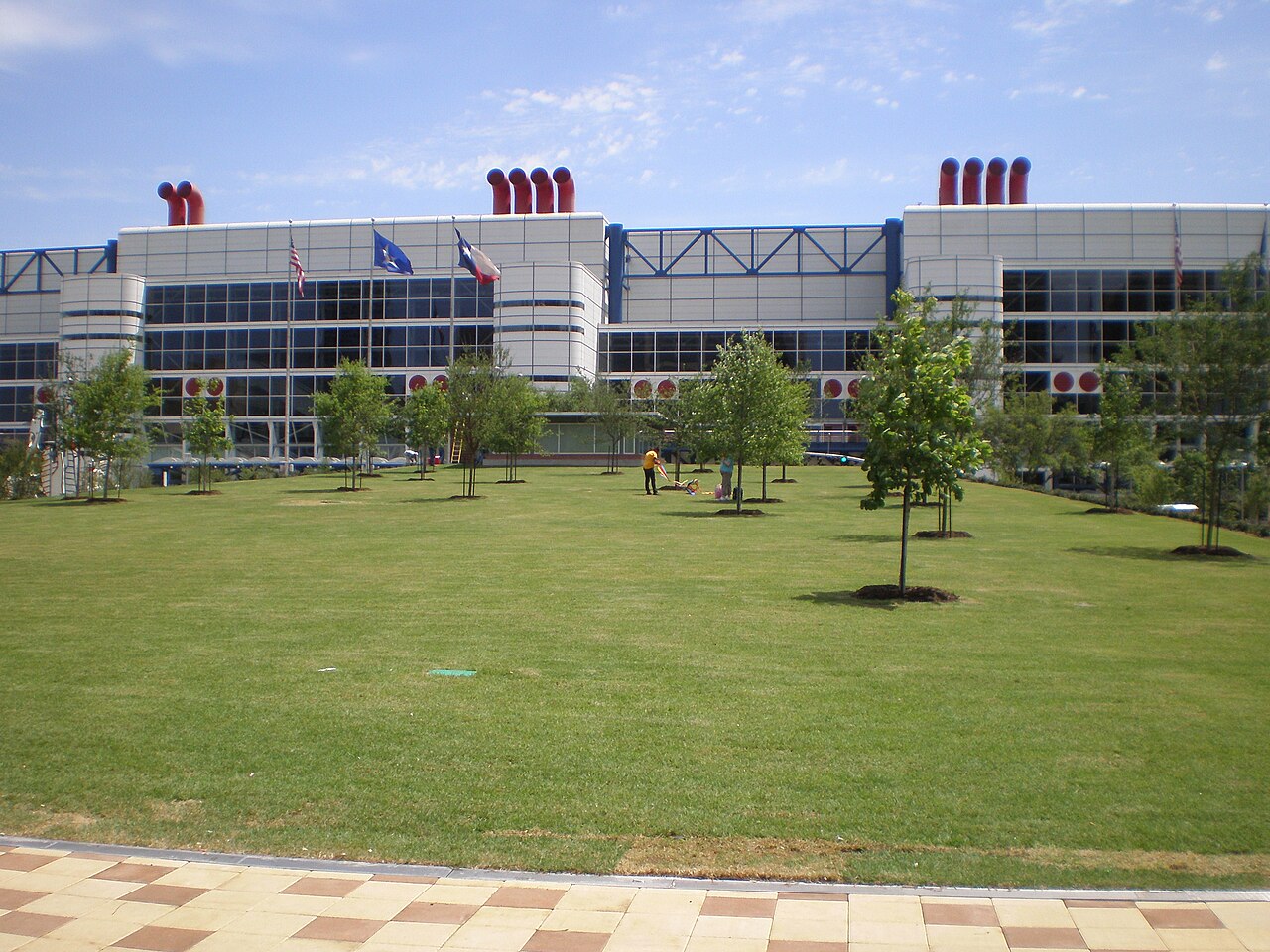
Image: Lawn, Discovery Green, Another Believer, CC BY-SA 3.0, via Wikimedia Commons.