There’s a lot that goes into hosting a holiday dinner or family feast, but let’s face it, nothing steals the show quite like that golden-brown holiday turkey. When it comes out juicy, tender and perfectly roasted, it feels like a complete culinary triumph that makes all the stress worth it.
But getting to that point? That’s when the nervous sweating usually kicks in. Every year, millions of home cooks fall into the same traps, ending up with dry, stringy breast meat or, worse, an undercooked bird that ruins the main course.
The good news is that most of these kitchen disasters trace back to one simple common denominator: guessing instead of measuring. Using a smart meat thermometer for turkey that is one of the best on the market takes the guesswork out of the equation, and you can actually enjoy your own party.
Here’s a walk-through of five common turkey-cooking mistakes, and how a trusty thermometer helps you avoid them like a pro.
1. Depending Only on Estimated Cooking Times
One of the oldest traditions in holiday cooking is to follow recipe timelines blindly: “Cook at 325°F for 15 minutes per pound.” Seems easy enough, right? Sadly, turkeys don’t read recipe books.
Every bird is different. Exact weight, stuffed or unstuffed, individual oven hot spots and even how completely thawed it is can all make a drastic difference in cooking times. Relying solely on the kitchen clock can often mean pulling the turkey way too early or leaving it in until it’s all dried out.
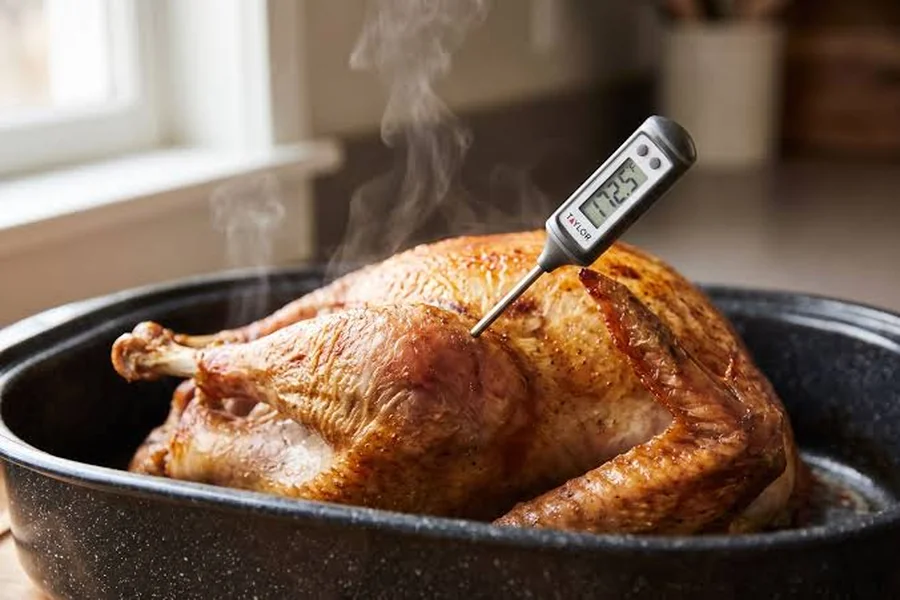
- The Fix: Think of recipe cooking times as guidelines, not hard and fast rules. Insert a leave-in meat thermometer for turkey straight into the deepest part of the breast before it even hits the oven. Forget watching the clock constantly; watch the internal temperature in real time. When it reaches your target zone, your turkey is done no matter what the timer says.
2. Incorrect Placement of the Probe
Even with a good thermometer, a bad reading can ruin your meal if the sensor isn’t placed properly in the meat.
A very common mistake is to jam the probe way too close to the bone, hit a pocket of fat, or push it all the way through into the main cavity. Bone conducts heat differently from meat, so it can fool your thermometer into registering a high temperature while the meat around it is still dangerously undercooked.
- The Fix: Where you put it makes all the difference. You want to insert the probe horizontally into the thickest part of the turkey breast, keeping it well away from bone, gristle and deep cavity gaps.
- This is much easier with the Meater Plus wireless thermometer and other modern devices, with clear visual cues and thin probes that help you easily find the thermal center, so your measurements accurately reflect the true doneness of the bird.
3. Always Opening the Oven Door
It’s so hard to fight the urge to look. Every twenty minutes, a lot of cooks want to open the oven door to baste, stare at the skin, or poke the turkey with a dial thermometer.
Every time you open up that oven door, you let out a huge blast of heat. This immediately drops your oven temp 25-50 degrees, making your oven work overtime and adding a good bit of time to your whole cooking schedule.
- The Fix: Simply close the oven door and let it do its thing! A wireless thermometer that connects to your phone via an app lets you check the internal temperature of your turkey from the comfort of your living room. You watch the temperature graph rise comfortably, not disturbing the internal climate of the oven.
4. Forget About Cooking Leftovers
You take the turkey out of the oven at the exact moment your thermometer shows 165°F (74°C), but when you carve it later, you discover that it has dried out? It’s a sad moment.
Many cooks forget that heat doesn’t magically stop transferring the moment food leaves the heat source. That is called carryover cooking, and a large roasted bird will continue to cook internally for another 10 to 15 minutes after you pull it out, often rising another 5 to 10 degrees right there on the counter. Waiting until the thermometer reads 165°F inside the oven, you will almost certainly overshoot.
- The Fix: Use the customizable high-temperature alert on your thermometer. Set your target alert a few degrees below the ultimate safety threshold (around 160°F for the breast). When the alarm sounds, remove the turkey, tent loosely with foil and rest. The residual heat will safely carry it across the finish line and lock in all those delicious juices.
5. Not Knowing the Difference Between White Meat and Dark Meat
The dirty secret of whole turkeys is that they’re actually two completely different cooking projects in one package. The lean breast meat cooks super fast and dries out quickly, but the dark meat in the thighs and legs has more connective tissue, fat, and bone that needs a higher temperature to break down and render properly.
Cooking the whole bird to one uniform temperature usually results in dry, chalky breasts or chewy, undercooked thighs. You shouldn’t have to choose between the two.
- The Fix: Watch carefully to maintain a balance of white and dark meat. Multi-probe systems let you monitor several zones simultaneously. Place one probe in the bottom of the breast and the other in the thigh. This lets you keep your breast meat beautifully succulent while the dark meat reaches the higher temperature it needs for the best texture and safety.
Enjoy a Stress-Free Holiday Dinner
Cooking a fabulous turkey shouldn’t feel like a high-stakes guessing game. Forget the old habits of timing everything to the minute, or opening the oven door every couple of minutes. Get a good meat thermometer for turkey, and you’ll get consistent results that are restaurant-quality every time.
Fill your kitchen with the right smart tools this season and actually enjoy your holiday table built around a turkey that is perfectly crisp on the outside and wonderfully juicy on the inside.