
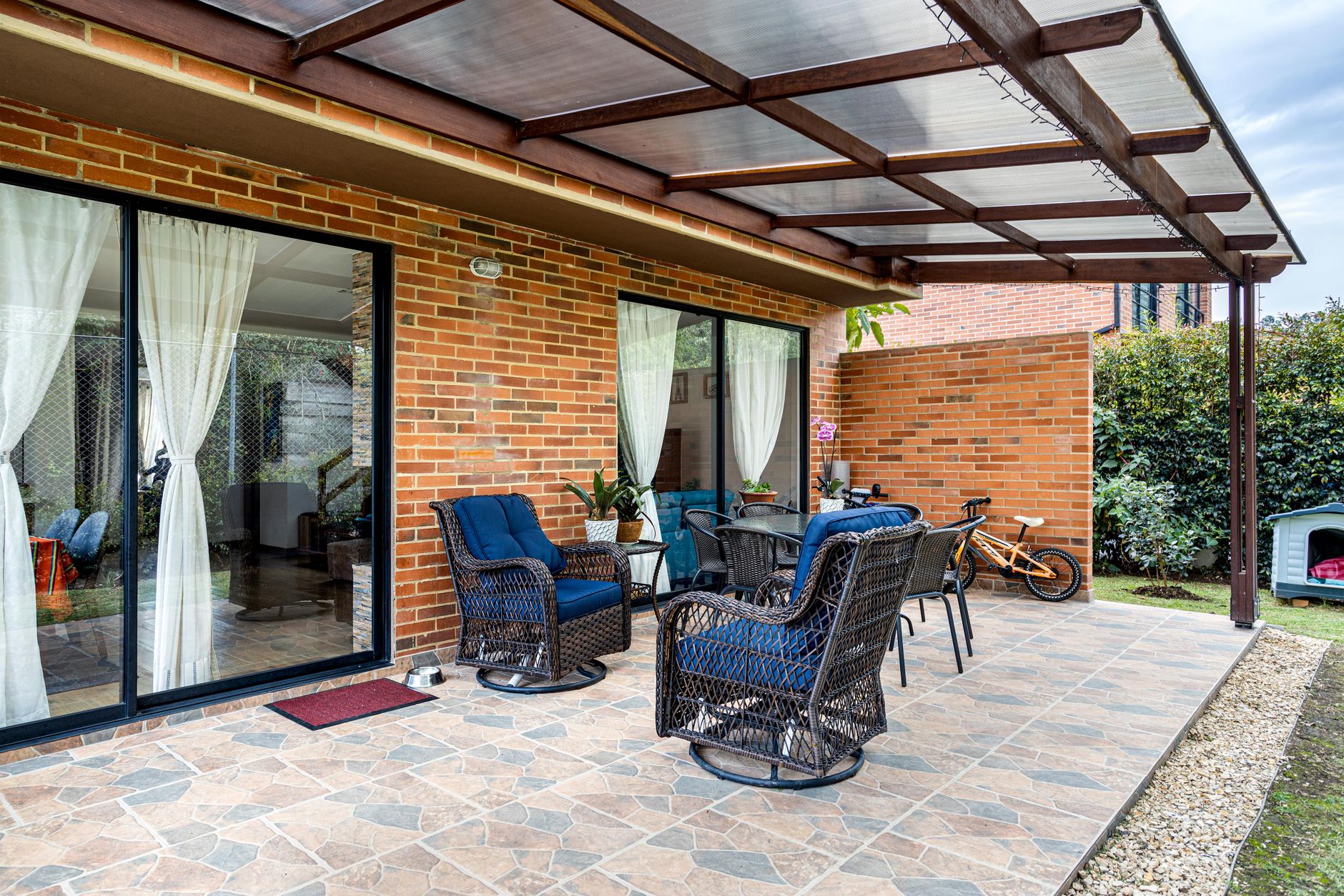
The spot beside the patio sofa looks perfect for a lantern. It fills an empty corner, sits within reach and would look lovely through the kitchen window. There is just one detail to check before buying a solar version: that corner may spend most of the day beneath the roof.
A covered patio presents two different questions. Where would a light be useful after dark? And where can its panel collect enough daylight to charge as intended? Sometimes the answers point to the same place. When they do not, the panel arrangement matters more than the color of the shade.
Look at the patio while the sun is out
Start with the roofline, nearby fences and trees. A patch of paving that catches the morning sun may be shaded by lunchtime. The wall above it may have a completely different exposure. Check the proposed panel position at several points during the day, rather than judging the whole patio from the back door.
This does not require a technical survey. A few phone photos can help you remember where the shadows fall. Compare those observations with the charging conditions specified for the exact light. A bright-looking space beneath an awning is not necessarily receiving the direct sunlight a particular panel needs.
Think beyond the current month, too. Leaf growth and a lower seasonal sun can change the available exposure. If the intended location only looks promising because the trees are bare, allow for what happens when that canopy returns.
Find the panel in the product photographs
Before narrowing down solar outdoor lighting by finish or shape, establish whether the panel is built into the fixture or supplied separately. With an integrated design, the lamp and its charging surface share a location. Moving the light into a sheltered corner also moves its panel into that corner.
A separate panel can offer more flexibility, provided the model allows it to be positioned somewhere with suitable exposure. Check the supplied cable length and permitted mounting arrangement. Trace the actual route around the patio, including corners; the straight-line distance between the lamp and the sunny spot can be misleading.
Look for installation drawings as well as styled photographs. An attractive night image can show the shape of the fixture, but it cannot tell you how well that location charges during the day. If the panel is hard to identify, ask the supplier before ordering.
Wall-mounted lights can draw attention to timber cladding; panel exposure still needs a separate daytime check.
Decide what the light needs to do
A light for finding the back door has a different job from one that stays on beside a table throughout dinner. Write down the ordinary evening you want to accommodate. Perhaps you sit outside for an hour after work, or make several short trips between the kitchen and garden.
Then read the controls section. Does the light switch on automatically at dusk? Can you turn it off? Is there a timer, a brightness setting or a motion mode? Check what each setting actually does, including whether a selected mode has to be reset.
Treat runtime figures as conditional. Look for the charging conditions and operating mode attached to the claim. A stated duration at a lower setting should not be taken as a promise of the same duration at full brightness, especially after a poor charging day.
Try one location before ordering a matching set
If the mounting instructions and return terms allow a trial, start with one light. Follow its initial charging instructions, then assess it in the place where you expect to use it. For a portable model, keep a note of where it charged as well as where it stood that evening.
Check the view from the chair, not just from the garden gate. A visible light source might feel comfortable when you are standing but distracting at seated eye level. Notice whether you can see the things that matter: the edge of the table, the door handle or the route back indoors.
Give the test more than one evening. Record the weather, selected setting and approximate time the light fades or switches off. This will not predict every season, but it gives you a better basis for buying several fixtures than a single successful night.
A path-side position offers another place to consider when the seating area sits beneath a roof.
Leave room for ordinary upkeep
The panel needs to remain accessible for cleaning according to the manufacturer’s instructions. Consider this before placing it above a deep planter or behind climbing plants. A location that is easy to reach now may become awkward once the garden fills out.
Also check the battery information. Is replacement supported, and are the correct parts available? If seasonal storage is recommended, find out how the fixture should be switched off and stored. These details are less photogenic than a glowing lantern, but they affect how manageable the purchase will be a year later.
When comparing options at Dazuma, keep the shortlist tied to the patio you actually have: its cover, available sun and usual evening routine. The right choice may be a wall light, a movable lantern or a fixture nearer the open garden. Settle the charging location first, then choose the design you want to look at from your chair.